By: RashScan Editorial Team
Updated: July 26, 2026
Standard: Educational information, not a diagnosis
Quick answer
Heat rash in newborn babies (miliaria) is a harmless, temporary rash caused by blocked sweat ducts when a baby gets too hot. It appears as tiny clear water-droplet blisters or small red prickly bumps, usually on the neck, chest, back and skin folds. Treatment is simple: cool the baby down, remove a layer of clothing and keep the skin dry — most cases clear on their own within two to three days without any creams or medicines.
Why heat rash happens in newborn babies
Baby heat rash happens because newborn sweat ducts are still immature and narrow. They block easily, and when sweat can't escape to the skin surface it leaks into the surrounding skin and produces the tiny bumps of miliaria. This is why miliaria in babies is commonest in the first weeks of life, while the sweat glands are still maturing, and why it flares in hot, humid weather.
The usual triggers are well-meaning overheating: a warm room, one layer too many, tight swaddling, or a fever. Babies can't regulate their temperature as well as older children and rarely complain about being hot — the rash is often the first sign. The neck, upper chest and back are the classic spots because they're warmest, and heat rash on a baby's face can appear under hats or against a warm caregiver's skin.
What it looks like
Miliaria crystallina
Tiny, clear, pinhead-sized blisters that look like drops of water sitting on the skin. They're fragile, break easily when touched, and aren't itchy or sore. This form is especially common in the first weeks of life and disappears quickly with cooling.
Miliaria rubra (prickly heat)
Small red prickly bumps, sometimes with a tiny red base, grouped on the neck, chest, back, skin folds and along the diaper edge. It can prickle mildly, but heat rash on baby skin is usually not distressing the way eczema is — most babies with heat rash feed and sleep normally and don't scratch.
Heat rash vs baby acne vs eczema
Three common newborn rashes get constantly mixed up, and the differences matter:
- Heat rash: appears with heat — after a hot day, overdressing or fever — and fades with cooling within days. Tiny blisters or prickly red bumps on the warmest, sweatiest areas.
- Baby acne: red bumps and small whiteheads, mostly on the cheeks, appearing from around two weeks of age. It's driven by hormones, completely unrelated to heat, and clears on its own over weeks.
- Eczema: dry, rough, itchy patches that persist for weeks rather than days, often on the cheeks and outside of arms and legs. Babies with eczema are clearly bothered and scratch; babies with heat rash usually aren't.
If the rash came on during hot weather and is already improving as you cool the room, heat rash is the likely answer. For a broader comparison of heat rash in older children and adults, see our heat rash guide.
Baby heat rash treatment and self-care
Baby heat rash treatment is mostly about removing the cause — heat. Move the baby to a cooler room, take off a layer, and dress them in loose, breathable cotton clothing. Cool or lukewarm baths followed by gentle air drying (pat, don't rub) help sweat ducts unblock. Keep skin folds dry, especially the neck creases and the diaper area, where moisture lingers longest.
With cooling alone, most heat rash on baby skin clears in two to three days, and miliaria crystallina can fade within hours. No medication is needed, and none should be used without a pediatrician's advice.
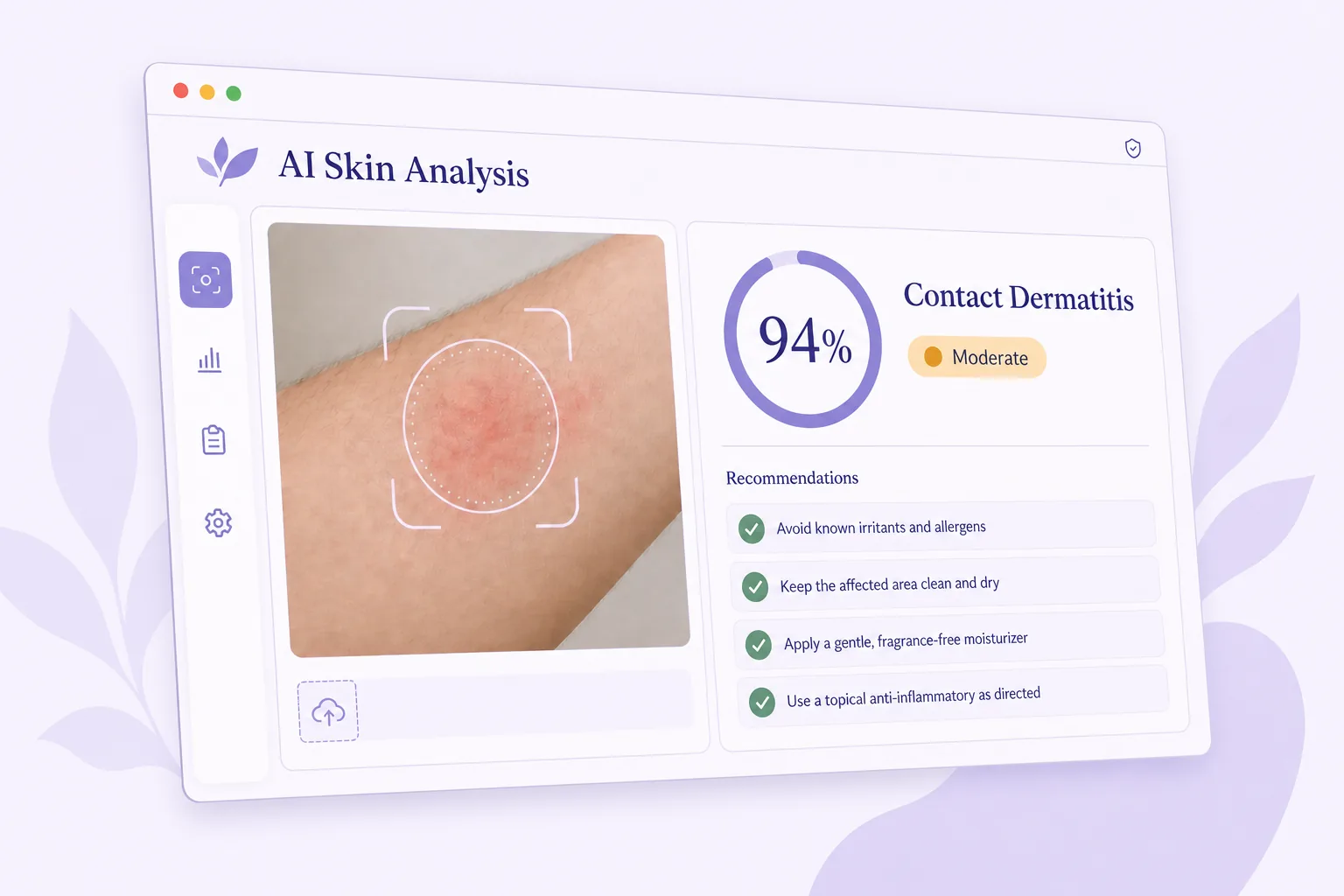
Not sure it's baby heat rash? Scan the rash — RashScan compares it against 50+ skin conditions in about a minute.
Scan your rash nowWhat NOT to do
- No oily ointments or thick creams. They occlude the sweat ducts further and can make the rash worse or trap infection in it.
- No powders. Talc or cornstarch dust can be inhaled by the baby and irritate their airways — keep them off newborn skin.
- Don't over-wrap to "sweat it out." Extra bundling is what causes heat rash, not what cures it.
- Don't pop the blisters. The tiny vesicles of miliaria crystallina break on their own; picking at them risks infection.
Preventing newborn heat rash
The simplest rule: dress your baby as you'd dress yourself in the same room, plus at most one light extra layer. Don't judge their temperature by their hands or feet, which are normally cool — feel the back of the neck or the chest instead. Warm and dry is right; hot or sweaty means remove a layer.
- Choose loose, breathable fabrics — cotton rather than synthetics — and avoid tight swaddles in warm weather.
- Keep the room comfortably cool rather than hot; a fan moving air (not pointed directly at the baby) helps.
- Outdoors, use shade and airflow, and skip heavy blankets over the stroller, which trap heat fast.
- Change out of damp clothing and wet diapers promptly, and dry skin folds after baths.
When to call the pediatrician
- Fever in a baby under 3 months always warrants same-day advice, whatever the rash looks like.
- Pustules, yellow crusts or spreading redness — signs the blocked ducts may have become infected.
- The rash hasn't cleared after 3–4 days of cooling, or is getting worse despite removing layers.
- Your baby seems unwell — unusually sleepy, feeding poorly, or clearly uncomfortable.
Sources and further reading
We use established public-health and dermatology references and link them directly so you can verify the guidance and read further.
Related skin guides
More skin tools from RashScan