By: RashScan Editorial Team
Updated: July 17, 2026
Standard: Educational information, not a diagnosis
What an AI skin analysis actually looks at
Modern skin analysis AI is trained on large libraries of clinically verified images. When it analyzes your photo, it isn't matching against one "reference picture" — it's weighing dozens of visual features simultaneously, the same cues dermatologists are trained to read:
- Color and tone — erythema (redness), hyperpigmentation, pallor, or the violet hue of certain inflammatory conditions
- Texture — scaling, crusting, smoothness, blistering, or the classic "sandpaper" feel patterns
- Borders and shape — well-demarcated plaques vs. diffuse patches, ring formations, linear streaks
- Distribution — where on the body a condition appears is often as diagnostic as how it looks
- Secondary changes — scratch marks, lichenification, weeping or dryness that tell the story of how the skin has been behaving
RashScan combines this visual analysis with the context you provide — onset, itching, pain, fever, spreading — because two conditions that look similar often behave very differently.
What you get in your skin analysis report
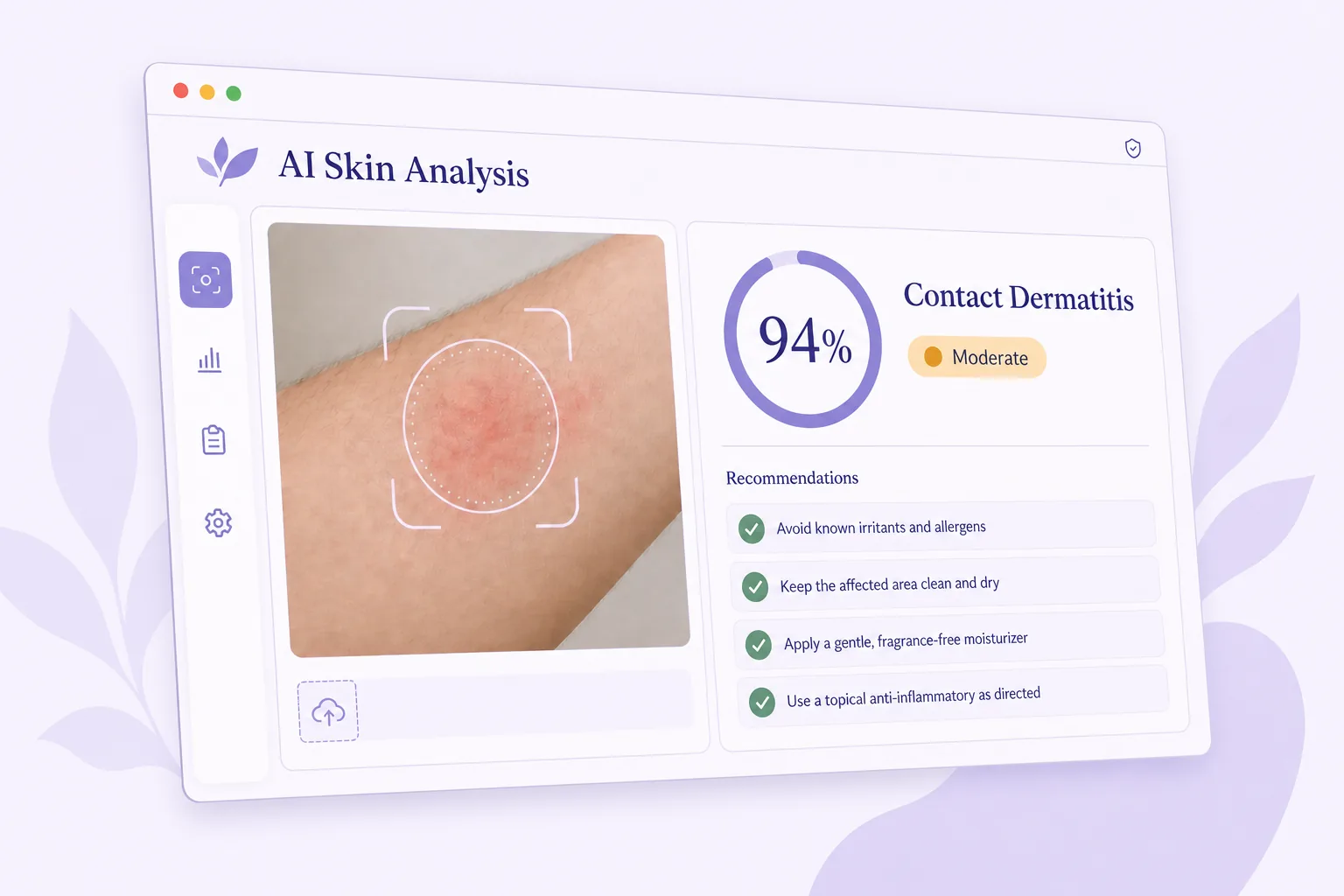
In about 60 seconds, your analysis returns a full structured report — not a one-line guess:
- Top condition with confidence score — plus the second and third most likely possibilities, so you understand the full picture
- Severity rating — mild, moderate, or "see a doctor," based on both the image and your symptoms
- Personalized recommendations — referencing what you told it, including treatments you've already tried
- A step-by-step treatment plan with specific over-the-counter product types
- An expected healing timeline — what days 1–3, 4–7 and week 2 should look like if things are going well
- Emergency warning signs specific to your likely condition
One photo. Sixty seconds. A complete AI skin analysis from a single upload.
Start my analysis
AI skin analysis vs. beauty skin scanners
Many "AI skin analysis" apps focus on cosmetics — wrinkle scores, pore size, hydration ratings for selling skincare routines. RashScan is built for a different question: "is something wrong with my skin, and what should I do about it?" The analysis targets medical-adjacent concerns — rashes, patches, bumps, reactions and irritations — and always ends with practical guidance, including when professional care is the right call.
If you're also curious about the products you put on your skin, RashScan includes a second scanner that analyzes cosmetic ingredient labels for irritants and allergens — useful when your skin analysis suggests a product reaction (learn more).
Getting the most accurate analysis
The AI can only analyze what the camera captures. Three things improve accuracy more than anything else: daylight (color-accurate, shadow-free), sharp focus at close range, and honest symptom answers — the questionnaire genuinely changes the result, because itch, pain and timing separate look-alike conditions. If your first analysis comes back with low confidence, retake the photo in better light; the difference is often dramatic.
Image quality and model limitations
Camera exposure, white balance, blur, compression and skin products can all change what the model sees. AI also has less context than a clinician: it cannot feel warmth, check whether a spot blanches, examine the rest of your skin or order a scraping, culture or biopsy. If the result conflicts with how ill you feel, trust the symptoms and seek care.
What makes a useful follow-up photo
Use the same room, daylight direction, camera and approximate distance. Include one close image for texture and one wider image for distribution. Do not apply a filter or digitally enhance redness. Consistent photos make progression easier to judge and help a clinician if you later share the history.
Using AI results safely
Start with reversible, low-risk steps such as avoiding a suspected irritant, gentle cleansing, cooling and protecting the skin barrier. Check medication labels and ask a pharmacist when pregnant, treating a child, using other medicines or applying products near the eyes or genitals. A low-confidence or worsening result should shorten—not extend—the time before professional review.
Sources and further reading
We use established public-health and dermatology references and link them directly so you can verify the guidance and read further.
More skin tools from RashScan