By: RashScan Editorial Team
Updated: July 17, 2026
Standard: Educational information, not a diagnosis
The question every skin worry starts with
"What is this on my skin?" is one of the most-searched health questions in the world — because skin changes are visible, sudden and impossible to self-describe accurately. The frustrating part: text search can't see your skin. You type "small red bumps that itch," and the internet answers with everything from bed bugs to eczema to scabies, leaving you more anxious than when you started.
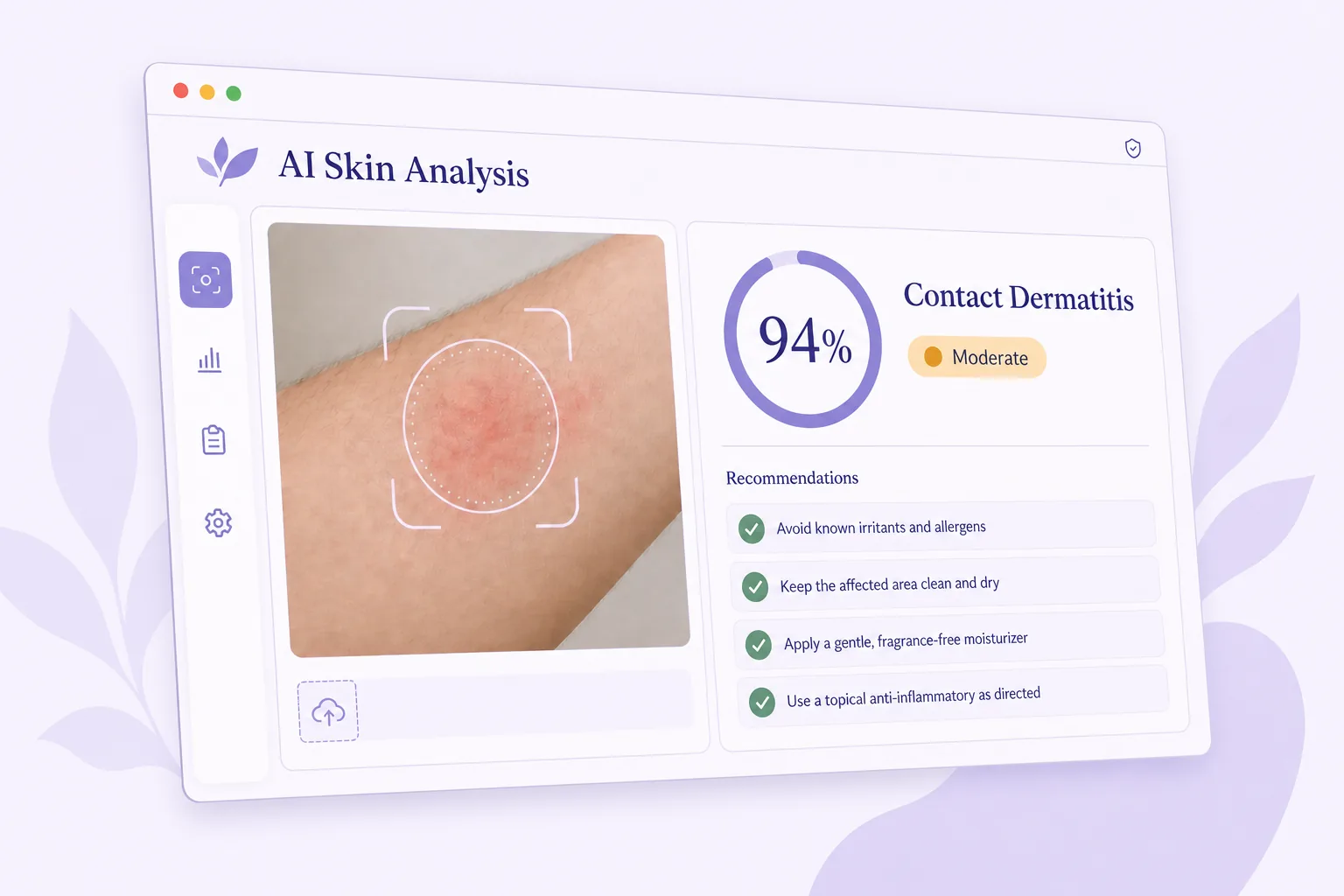
The fix is to flip the input. Show, don't tell. Upload a photo and let an AI trained on thousands of dermatologist-verified images tell you what your skin change most resembles — with a confidence score, so you know how strong the match is.
The usual suspects, by how they look
Most "what is this?" moments resolve to a surprisingly short list. Rough visual guide:
- Itchy red patches with dry, flaky skin — often eczema or contact dermatitis, especially near jewelry, waistbands or where a new product touched
- Raised welts that appear and move within hours — classic hives, usually an allergic response
- A ring with a clearer center — textbook ringworm (a fungus, not a worm)
- Tiny bumps or blisters clustered in sweaty areas — likely heat rash; see our complete heat rash guide
- Pimple-like bumps around hair follicles — folliculitis, common after shaving or tight clothing
- Painful blisters in a band on one side of the body — possible shingles; this one deserves a doctor promptly
- Scaly plaques with silvery scale on elbows, knees or scalp — characteristic of psoriasis
Visual guides help, but they're generic by nature. Your skin change has a specific appearance — and that's what the scanner reads.
Stop scrolling comparison photos. Scan yours and get a ranked answer.
Scan my skin now
When "what is this?" should become "see someone now"
Some presentations skip the app entirely. Seek prompt medical care if you notice:
- A rash with high fever, stiff neck or confusion
- Rapid swelling of lips, tongue or face, or any difficulty breathing
- A spreading area that is hot, very painful, with pus or red streaks — possible skin infection
- Purple spots or bruise-like patches that don't blanch when pressed
- A mole that changed in size, shape or color — book a dermatologist regardless of anything an app says
For everything else — the itchy patch, the mystery bumps, the "is this from my new detergent?" — a 60-second scan gives you a grounded answer and a plan, instead of another hour of anxious searching.
Start with pattern, not the scariest possibility
Ask whether the change is flat or raised, smooth or scaly, fixed or moving, painful or itchy, and localized or spreading. Timing provides another clue: minutes to hours suggests hives; days after a new exposure suggests contact dermatitis; a slowly enlarging ring may suggest a fungal infection. These clues help narrow possibilities without pretending to confirm one.
Why location matters
Scalp scale, facial redness, hand vesicles, groin irritation and a one-sided band of blisters each have different common causes. Include the body location accurately in your scan questionnaire. Conditions can occur outside their textbook locations, so location should guide—not override—the full picture.
Changes worth documenting
Record growth, new colors, bleeding without injury, crusting, drainage, tenderness, fever and response to simple care. Persistent or recurrent changes deserve review even if a photo tool suggests a common benign condition.
Sources and further reading
We use established public-health and dermatology references and link them directly so you can verify the guidance and read further.
More skin tools from RashScan