By: RashScan Editorial Team
Updated: July 17, 2026
Standard: Educational information, not a diagnosis
Why assessment by picture beats describing symptoms
Words flatten skin conditions. "Red bumps" describes hives, heat rash, folliculitis, insect bites and early chickenpox equally well — five conditions with five different treatments. A photograph preserves what text destroys: the exact shade of red, the size and spacing of bumps, the sharpness of borders, the pattern across skin.
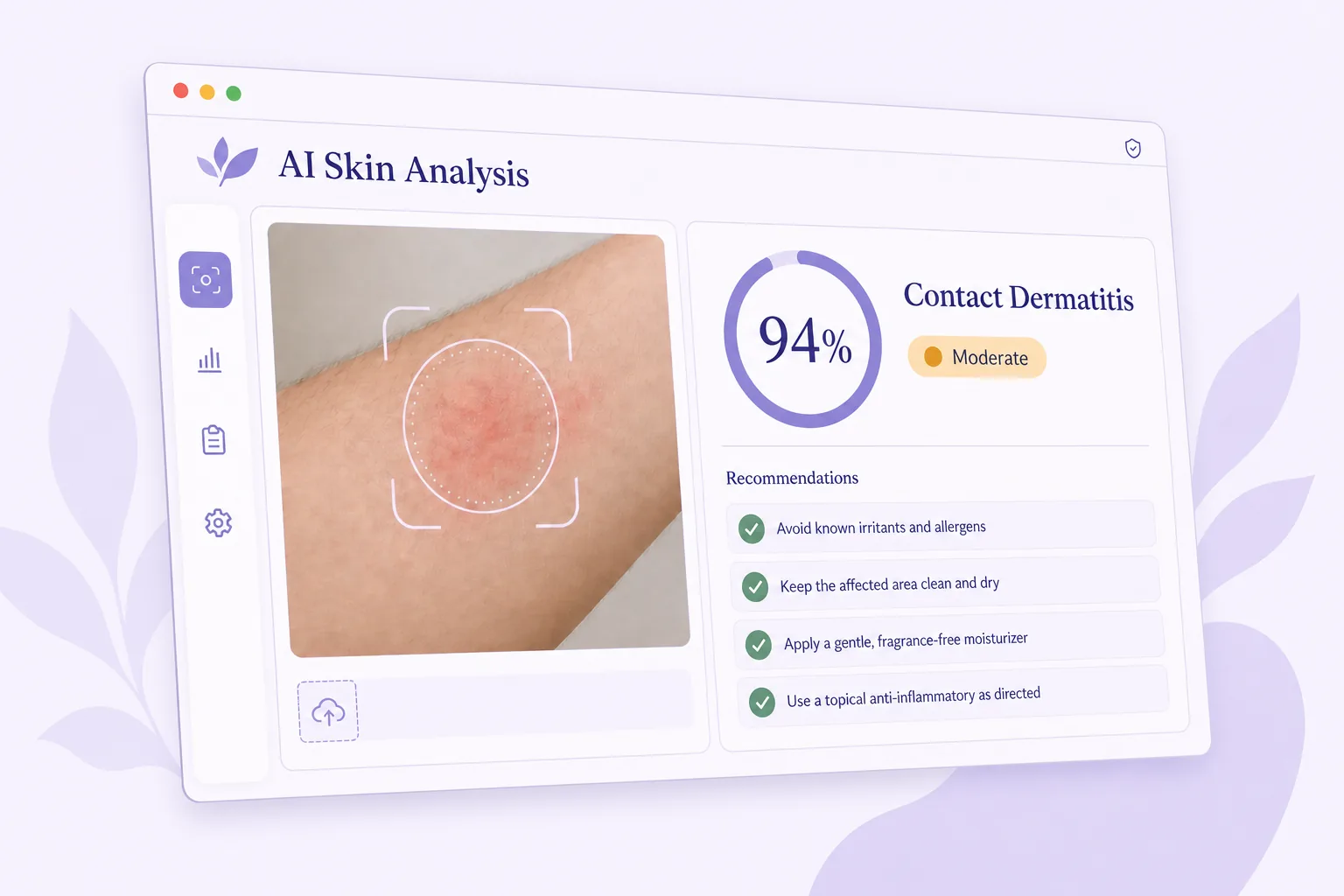
That's why the first thing a dermatologist does is look. AI assessment from pictures follows the same logic: RashScan's model reads the visual evidence in your photo, weighs it against thousands of verified clinical images, then refines the answer with your symptom details. The output is a ranked list of likely conditions — each scored, explained, and paired with what to do next.
What happens after you upload your picture
- Instant processing — your image is analyzed over an encrypted connection; nothing is shared or made public.
- Visual matching — the AI evaluates color, texture, shape, borders and distribution against 50+ recognized conditions.
- Context weighting — your answers about itch, pain, fever, timing and spread separate look-alike conditions.
- Your report — top condition with confidence score, two alternatives, severity, step-by-step treatment plan, healing timeline, and the specific red flags that mean "see a doctor."
Picture assessment — with honest limits
Let's be precise about the word "diagnosis": only a licensed clinician can diagnose you. What RashScan provides from your picture is a rigorous educational assessment — the same kind of ranked differential a specialist forms on first look, before tests confirm it. For the majority of everyday concerns (contact reactions, eczema flares, fungal infections, heat rash, bites), that first look plus clear guidance is exactly what you need to act sensibly.
And when your picture shows something that needs human eyes — atypical features, possible infection, anything that needs an in-person exam — the report says so plainly instead of guessing. An honest "get this checked" is worth more than a confident wrong answer.
Taking a picture the AI can read
- Daylight over lamplight — artificial light shifts colors; the window is your friend.
- Fill the frame — get close enough that the affected area dominates the photo, but keep it in focus.
- Steady the camera — rest your elbow on something; blur destroys texture detail.
- Skip flash and filters — both overwrite the color data the model reads.
- Multiple angles help — if the first result has low confidence, a second photo from a different angle often sharpens it.
Close-up and context photos serve different purposes
A close-up preserves scale, crusting and tiny blisters; a wider photo shows distribution and whether the eruption follows a clothing edge, skin fold, nerve band or exposed area. If the first result is uncertain, provide both views rather than repeatedly zooming or sharpening one image.
When not to photograph first
Call emergency services for breathing difficulty, collapse, rapidly developing facial or tongue swelling, or a severe widespread blistering rash. Seek urgent medical advice for fever with a non-blanching purple rash, severe pain out of proportion to appearance, eye involvement or signs of a rapidly spreading infection.
Preparing the image for a clinician
Keep the original unedited file and record the date. Avoid including identifying features unless medically useful. If you later consult a clinician, share the original plus a short timeline, treatments tried and whether the condition changed. This context is often more useful than a single heavily cropped image.
Sources and further reading
We use established public-health and dermatology references and link them directly so you can verify the guidance and read further.
More skin tools from RashScan