By: RashScan Editorial Team
Updated: July 29, 2026
Standard: Educational information, not a diagnosis
Quick answer
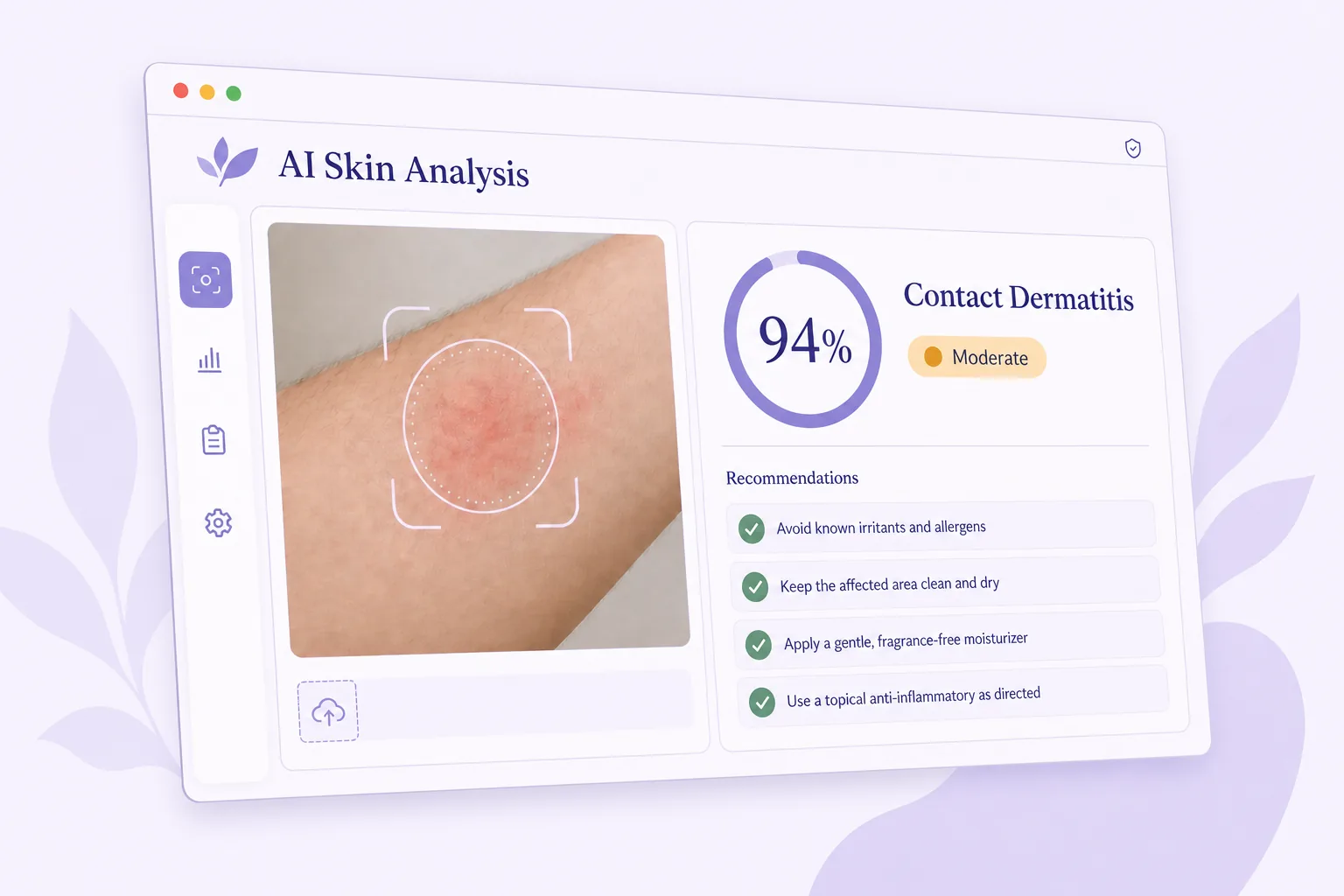
A rash identifier is a tool that analyzes a photo of your skin and names the most likely condition. RashScan's AI rash checker reads color, shape, texture and distribution in your picture, compares them against 50+ common skin conditions, and returns ranked possibilities with severity guidance and next steps in about 60 seconds — no signup, and your photo is not stored.
Identify a rash by picture
Describing a rash in words is surprisingly hard. "Red," "bumpy" and "itchy" fit dozens of conditions that need completely different treatment — which is why text searches so often end in confusion or worst-case-scenario spirals. A photo carries the information words can't: the exact shade of red, whether the border is sharp or blurry, whether bumps are filled with fluid, whether the rash forms rings, lines or scattered dots.
That's what a picture-based skin rash identifier uses. Whether you think of it as a rash photo identifier, an online rash scanner or an AI rash checker, the process is the same:
- Visual analysis: the AI reads color, shape, texture, border definition and distribution across the skin — the same features a dermatologist looks at first.
- Pattern matching: those features are compared against 50+ of the most common skin conditions, from eczema and hives to ringworm and heat rash.
- Next-step guidance: you get the ranked matches, a severity reading, self-care suggestions and the specific warning signs that mean it's time to see a doctor.
Add a few quick details — when the rash appeared, whether it itches or burns, whether it's spreading — and the whole thing takes about a minute. If you want to identify a rash by photo right now, there's no account and no signup in the way.
Staring at a rash right now? Upload a picture and get the likely condition, severity and next steps in about a minute.
Scan your rash now
Match what you see
Not sure how to describe your rash? Start from the pattern. These are the eight looks we get asked about most — each links to a full guide with photos, causes, treatment and when to worry.
Common rash concerns, explained
Rash on the face: common causes
Facial rashes get attention fast because you can't hide them — and because facial skin is thin and reactive. The usual suspects are contact reactions (a new cream, sunscreen or makeup), seborrheic dermatitis around the nose and brows, and perioral dermatitis: clusters of small bumps ringing the mouth, often triggered by steroid creams or heavy cosmetics. Rosacea causes flushing and bumps across the cheeks and nose. Because several look-alikes need opposite treatments, a photo scan is a useful first sort before you experiment with products.
Itchy rash: why it happens
Itch is your immune system talking. The most common drivers are allergic or irritant contact dermatitis — your skin reacting to something it touched, like fragrance, nickel or a plant — and allergy rashes from foods or medications. Hives itch intensely and move around; eczema itches and lingers; dry winter skin itches with barely any visible change. The pattern of the itch matters: itch that started hours after a new product points one way, itch with wheals that vanish within 24 hours points another.
Ringworm vs eczema: how to tell
This is the classic look-alike pair. Ringworm — a fungal infection, not a worm — grows outward as a ring with a raised, scaly, active edge and a clearing center. Nummular eczema makes round, coin-shaped patches too, but the border is uniform rather than raised, and there's no central clearing. Ringworm is usually one or a few slowly enlarging rings; eczema tends to appear in several patches at once. Getting this right matters: steroid cream alone calms eczema but feeds the fungus. If you're unsure, scan it — the AI separates these two reliably.
Rash that won't go away
A rash that shrugs off two to four weeks of sensible self-care deserves a second look, because persistence usually means one of three things: the treatment doesn't match the condition (antifungal on eczema, or steroid on fungus), the trigger is still present (a daily-use product you haven't suspected), or it's a look-alike such as psoriasis that needs different care entirely. Start with what is this on my skin? to re-check the assumption, then book a professional exam if it's still there. Don't keep escalating steroid strength on an undiagnosed rash.
Rash on arms or legs
Location narrows the list considerably. Rough, sandpaper bumps on the outer upper arms and thighs are almost always keratosis pilaris — harmless plugged follicles that respond to gentle exfoliating moisturizers. Itchy patches in the elbow and knee creases suggest eczema; thick silvery plaques on the outer elbows and knees suggest psoriasis; streaky lines of blisters after gardening or hiking point to poison ivy. Shins and forearms also take the brunt of insect bites and dry-skin itch in winter.
Rash with fever: when it's urgent
A rash plus fever means the body is fighting something systemic, and some of those somethings are dangerous. In children, common culprits include viral illnesses like hand, foot and mouth disease (which adults can catch too). Call emergency services now if a rash comes with trouble breathing or swallowing, swelling of the face, lips or tongue, or a purple-red rash that does not blanch (fade) when you press a clear glass against it — non-blanching rashes with fever can signal meningococcal infection. When in doubt with fever, skip the scan and get seen.
What the AI rash identifier checks
The model is trained around the conditions behind the vast majority of everyday rash worries. Ten of the most common:
The full library covers more than 50 conditions, each with its own in-depth guide — browse the skin condition library to read up on any match the scanner gives you.
How the rash identifier works
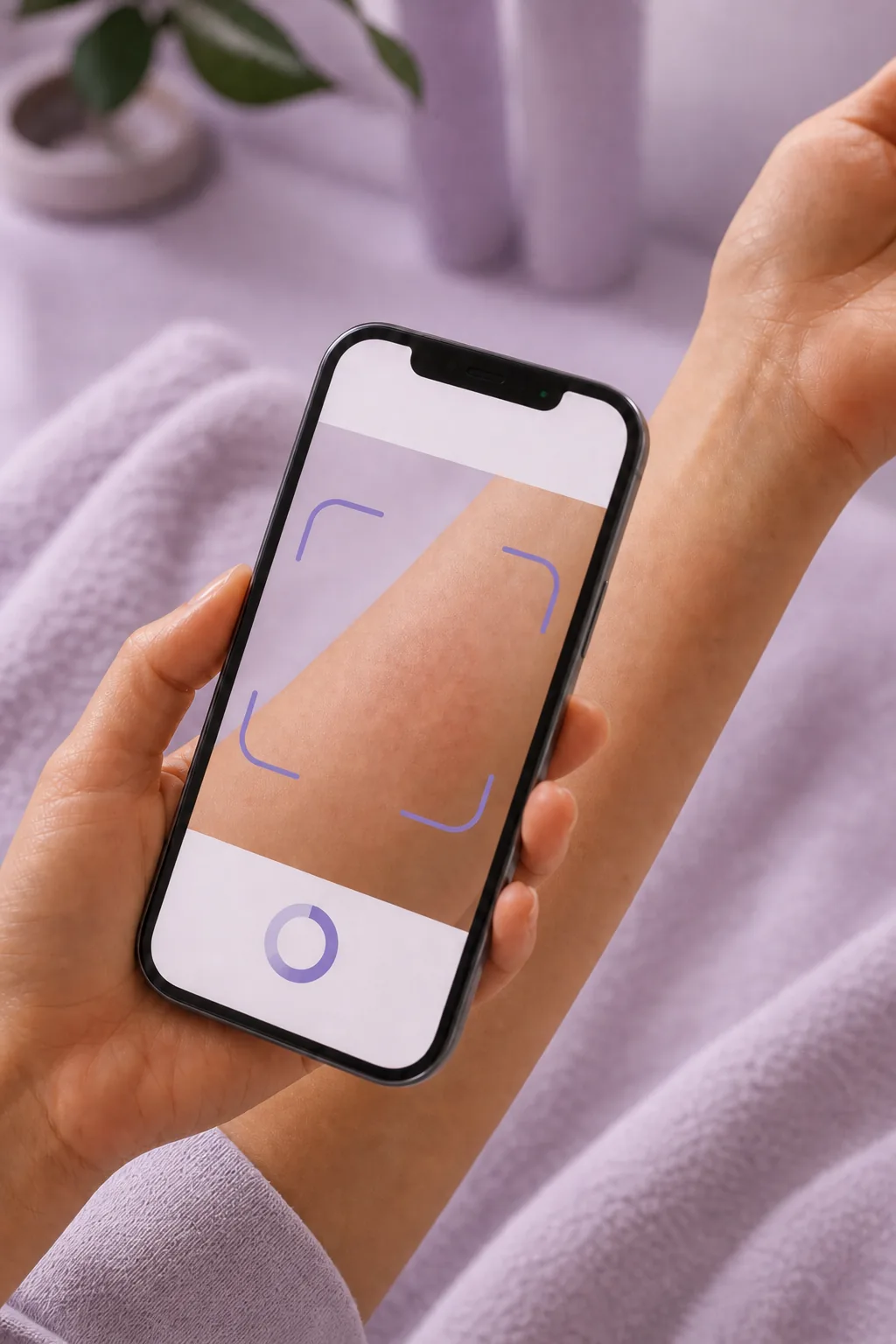
- Take or upload a photo. Good, even daylight and a sharp focus beat fancy equipment — one close-up of the rash plus one wider shot showing where it sits on the body is ideal. Then answer three or four quick questions about timing, itch and spread.
- The AI analyzes the visual signature. Color, texture, border shape, scale, blistering and distribution are extracted and compared against tens of thousands of dermatology reference images spanning 50+ conditions.
- You get a structured report. The most likely condition plus runner-up possibilities with confidence scores, a severity reading, common causes, self-care and over-the-counter options, an expected healing timeline, and the red flags that should send you to a professional instead.
What this tool can and cannot do
We'd rather earn your trust with honesty than with hype, so here's the straight version.
What it can do:
- Sort a confusing rash into a short, ranked list of likely conditions in about a minute.
- Tell look-alike conditions apart surprisingly well — ringworm vs nummular eczema, heat rash vs folliculitis.
- Give you a calm, structured next step at 2 a.m. instead of a search-results spiral.
- Flag the specific warning signs that mean self-care isn't the right call.
What it cannot do:
- It is a screening aid, not a medical diagnosis. Only a clinician who examines you can diagnose.
- It can't feel the skin, take your temperature, review your medications or ask about your medical history beyond the few questions it poses.
- It can't run tests — no skin scrapings, patch testing, blood work or biopsies.
- It can't judge rare conditions reliably, and a poor-quality photo lowers accuracy. When confidence is low, the report says so and recommends professional care.
When a rash is serious
Most rashes are annoying, not dangerous. These signs change that — seek medical care promptly if you notice:
- Rapid spread — redness expanding hour by hour, especially with red streaks heading away from the area.
- Fever alongside the rash, or feeling systemically unwell.
- Pus, honey-colored crusting or increasing pain — signs of bacterial infection.
- Face, eyes or genitals involved — these areas scar and complicate more easily.
- No improvement after two weeks of appropriate self-care, or a rash that keeps coming back.
- The patient is an infant, or you're pregnant — lower threshold for both; get checked early.
Emergency now: trouble breathing or swallowing, swelling of the face, lips or tongue, or a purple rash that doesn't fade under pressure from a clear glass. Call emergency services.
Rash or skin cancer?
A patch that looks like a harmless rash but behaves differently — a single spot that slowly grows, crusts, bleeds or never heals — deserves specific attention. Basal and squamous cell skin cancers are regularly mistaken for eczema or dermatitis for months, and melanoma can hide in what looks like a new mole rather than a rash at all. The rough rule: rashes come on over days and respond to treatment within weeks; a solitary "rash" that ignores treatment and slowly changes shape or color needs a professional look. Get any changing or non-healing spot examined — with skin cancer, early is everything.
Sources and further reading
We base our guidance on established public-health and dermatology references and link them directly so you can verify the guidance and read further.
More skin tools from RashScan