Diaper rash is the commonest rash of infancy — a red, sore bottom caused by wetness, friction and trapped moisture. Learn how to tell irritant, yeast and bacterial rashes apart, how to get rid of diaper rash quickly, and when it's time to call the doctor.
By: RashScan Editorial TeamUpdated: October 1, 2026Standard: Educational information, not a diagnosis
Quick answer
Diaper rash (diaper dermatitis) is a red, irritated rash in the area a diaper covers, most often caused by prolonged contact with urine and stool, friction and trapped moisture. Most cases are irritant and clear in 2–4 days with frequent changes, gentle cleaning, a thick zinc-oxide barrier at every change and diaper-free air time. A beefy-red rash that involves the skin folds with small satellite spots is usually yeast and needs an antifungal cream. See a doctor for fever, blisters, pus, or no improvement after 3–4 days of good care.
What it is
Diaper rash is the commonest rash of infancy — nearly every baby gets it at some point, most often between 9 and 12 months. Medically it's usually a form of irritant contact dermatitis: the skin under the diaper spends hours in contact with urine and stool, which raise skin pH and activate digestive enzymes in feces that attack the skin barrier. Add friction from the diaper itself and a warm, moist, airless environment, and the barrier breaks down into redness and soreness.
The rash tends to flare when stools are frequent — during teething, after starting solids, with diarrhea, or after a course of antibiotics. It isn't a sign of poor hygiene or neglect; it's what happens when very thin infant skin meets an environment it wasn't designed for. Most cases are mild and settle within days of good home care.
The three types to tell apart
Not every red bottom is the same rash, and the treatment differs. Three patterns cover most of what you'll see.
Diaper rash pictures
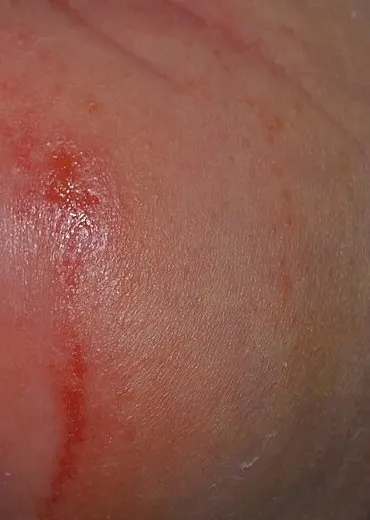
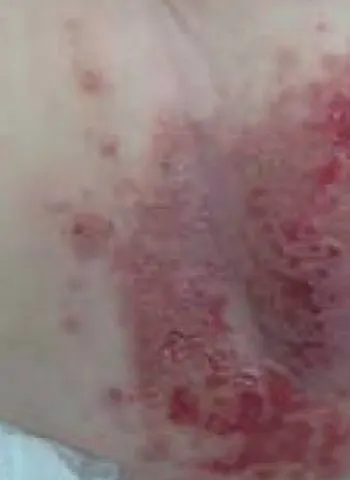
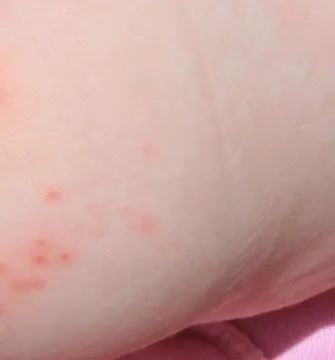
Real photos, cropped to show only the rash. Look at where the redness sits (on the skin that touches the diaper, or deep in the folds) and whether there are small spots beyond its edge.
Irritant diaper rashRed, sometimes shiny patches on the skin that presses against the wet diaper. Mild cases like this one settle in a few days with frequent changes and a thick barrier cream.Photo: Dailyboth, Wikimedia Commons, CC0, croppedYeast (candida) diaper rashDeep, beefy-red rash with small red dots scattered just outside the main patch, the "satellite spots". Barrier cream alone will not clear it; it needs an antifungal.Photo: Siegfried and Hebert, Wikimedia Commons, CC BY 4.0, croppedSmall scattered red spotsLittle red spots on the bottom can be the first satellite spots of yeast, or heat rash on a warm day. If they spread or join a red patch in the folds, think yeast.Photo: Tradimus, Wikimedia Commons, CC0, cropped
Not sure which type your baby has? Take a photo and RashScan will tell you which type it most likely is and what to do, in about 60 seconds.
The most common type. Look for red, shiny, sometimes slightly swollen patches on the convex surfaces — the buttocks, lower belly, thighs and genitals — where skin presses hardest against the wet diaper. Characteristically it spares the deep skin folds, because those folds don't touch the diaper. Skin may look glazed or chapped, and the baby may fuss during changes when the area is wiped.
Yeast (candida) diaper rash
A yeast diaper rash is typically beefy-red, often shiny, and crucially it involves the skin folds of the groin and thigh creases. The giveaway sign is satellite lesions: small red dots or pus-tipped bumps scattered just beyond the edge of the main patch. It commonly develops after a few days of ordinary irritant rash, or after antibiotics, and it won't clear with barrier cream alone — it needs an antifungal.
Bacterial diaper rash
Bacteria — usually staph or strep — can infect broken diaper-area skin. Impetigo shows as blisters or pustules that break into honey-colored crusts. A different pattern is strep perianal dermatitis: a bright-red, sharply defined ring around the anus, sometimes painful, occasionally with blood-streaked stool. Bacterial rashes need a clinician's assessment and often a prescription antibiotic ointment or oral antibiotic.
Diaper rash treatment and self-care
The foundation of diaper rash treatment is changing the environment under the diaper, not just adding creams:
Change frequently. Check and change the diaper as soon as it's wet or soiled — including once overnight if the rash is active.
Clean gently. Use warm water and a soft cloth or cotton wool, or fragrance-free, alcohol-free wipes. Pat — don't rub — and let the skin dry fully before re-diapering.
Apply a generous barrier at every change. A thick, visible layer of zinc-oxide paste or plain petroleum jelly shields skin from moisture and stool enzymes. You don't need to scrub off every trace at each change — clean the soiled areas and reapply over the top.
Give diaper-free air time. Let the baby kick bare-bottomed on a washable mat or towel for 10–15 minutes several times a day. Airflow is the single most healing thing you can add.
Size up for airflow. A slightly larger or looser diaper lets air circulate and reduces friction. Fasten snugly enough to contain, loosely enough to breathe.
Followed consistently, this routine settles most irritant rashes within two to four days.
Not sure it's diaper rash? Scan the rash — RashScan compares it against 50+ skin conditions in about a minute.
Yeast diaper rash: when barrier cream isn't enough
If the rash is beefy-red, creeps into the folds, and has satellite spots — or if a week of careful barrier care hasn't touched it — candida yeast is the likely driver. The fix is an over-the-counter antifungal cream such as clotrimazole or miconazole, applied thinly twice a day for one to two weeks, alongside the barrier paste (antifungal first, let it absorb, then barrier on top). Keep going for a few days after the skin looks clear, because yeast lingers invisibly and relapses easily. If there's no improvement after a week of antifungal treatment, see a healthcare professional — a prescription-strength antifungal or a different diagnosis may be needed.
What to avoid
Talcum powder: inhalation risk for babies, and it does nothing useful for the rash.
Cornstarch on broken or yeasty skin: it can feed candida and worsen infection.
Home steroid creams without advice: hydrocortisone used alone in the diaper area can thin delicate skin and fuel yeast. Only use it if a clinician recommends it, usually combined with an antifungal.
Tight plastic pants or overly snug diapers: they trap the very heat and moisture you're trying to eliminate.
Fragranced wipes and soaps: perfume and alcohol sting raw skin and can add contact irritation on top.
When to see a healthcare professional
Fever, or the baby seems unwell, unusually fussy or off feeds.
Blisters, open sores, pus or honey-colored crusts — signs of bacterial infection such as impetigo.
Severe diaper rash spreading beyond the diaper area — onto the trunk, face or limbs.
No improvement after 3–4 days of good home care, or the rash is getting worse despite it.
A baby under 6 weeks old with a significant rash — young infants deserve a lower threshold for review.
Recurrent rashes that clear and keep coming back — worth checking for yeast, allergy or another skin condition.
Sources and further reading
We use established public-health and dermatology references and link them directly so you can verify the guidance and read further.
A beefy-red, shiny rash that spreads into the skin folds of the groin and thighs — the opposite of irritant rash, which spares the folds. Look for small red dots or pus-tipped bumps (satellite lesions) scattered just beyond the main patch. It often follows a few days of ordinary diaper rash and doesn't improve with barrier cream alone.
Combine three things: change the diaper as soon as it's wet or soiled, clean gently with warm water and soft cloth (skip fragranced wipes), and apply a thick layer of zinc-oxide or petroleum barrier paste at every change. Add diaper-free air time several times a day. Most irritant rashes visibly improve within 48 hours of this routine.
A simple irritant diaper rash usually clears in 2 to 4 days with good home care. Yeast rashes take 1 to 2 weeks of antifungal cream. Any rash lasting beyond 3 to 4 days of careful treatment — or repeatedly coming back — deserves a professional look, because yeast, bacteria or another condition may be driving it.
Usually not. Most diaper rash is irritant contact dermatitis from wetness, stool and friction — not an allergic reaction. Allergy is more likely when redness matches exactly where a new wipe, diaper brand or cream touches, or when the rash appears with hives or symptoms elsewhere. Food allergy alone rarely causes a diaper-area-only rash.
See a healthcare professional if your baby has a fever, blisters, open sores or pus; if the rash spreads beyond the diaper area; if there's no improvement after 3 to 4 days of good care; if your baby is under 6 weeks old; or if rashes keep coming back. A beefy-red rash with satellite spots also warrants a visit, since yeast needs antifungal treatment.
Red, sore bottom that won't settle?
Scan it — RashScan helps separate irritant rash, yeast and bacterial infection, with clear next steps.