Quick answer
Most armpit rashes are one of seven things: contact dermatitis from deodorant, intertrigo from friction and sweat, a candida or fungal infection, folliculitis from shaving, heat rash, psoriasis in its 'inverse' form — or hidradenitis suppurativa, the one that causes recurring painful lumps and needs specialist care. Matching the pattern to the cause gets you to the right treatment quickly.
Armpit rash pictures
Real photos of common armpit rashes. Compare the color, the edge and where in the fold the rash sits. Pictures help you narrow it down, but many armpit rashes look alike, so use them as a guide, not a diagnosis.
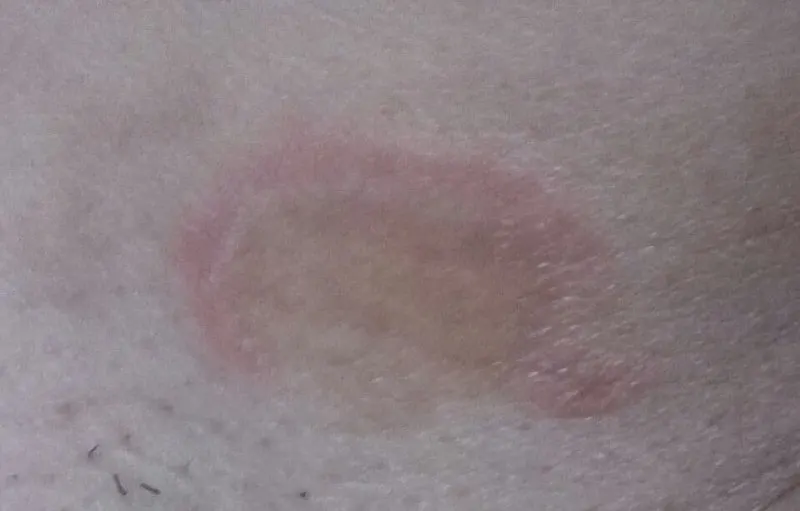
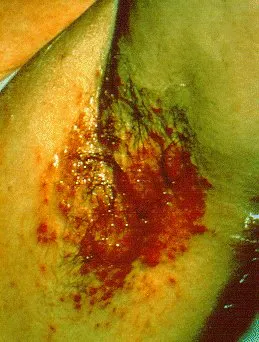
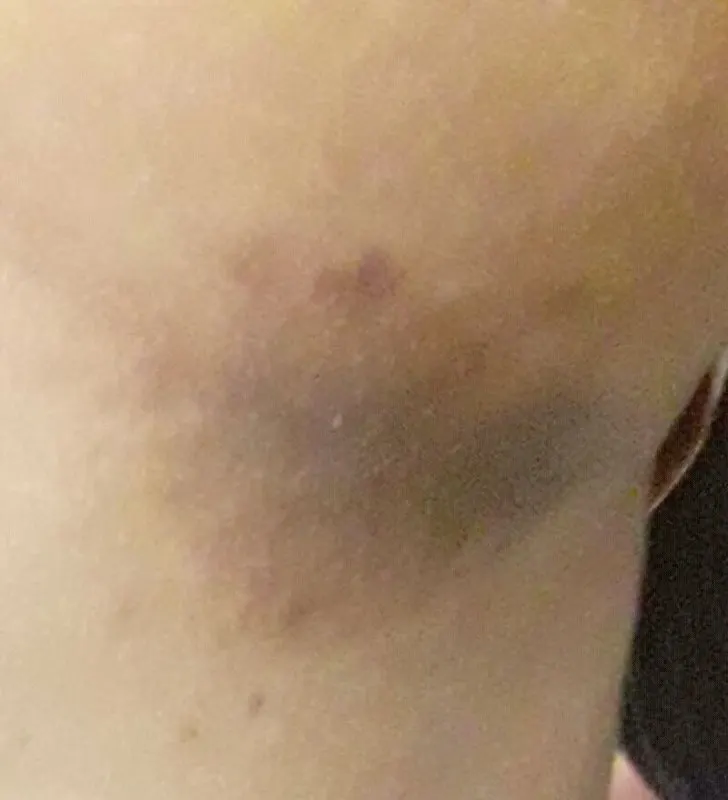
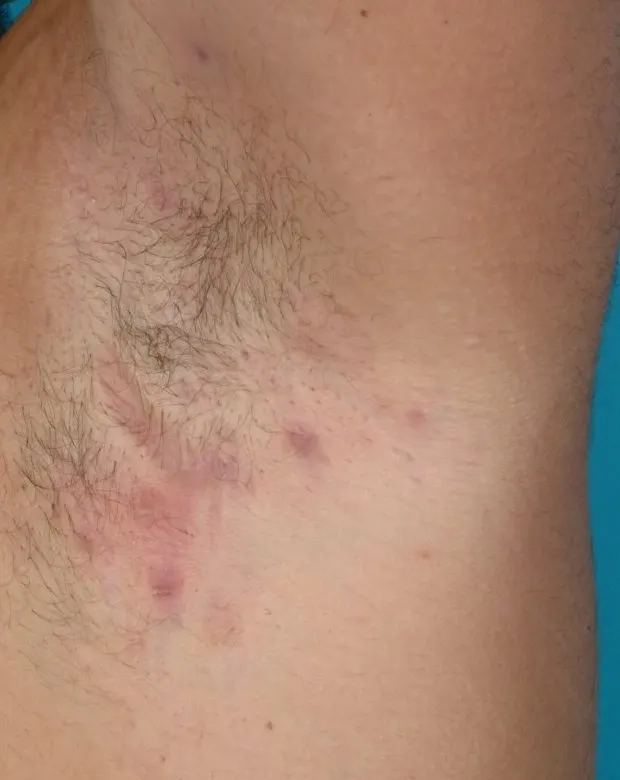
Deodorant rash (contact dermatitis), the most common cause, is not pictured: it usually looks like an itchy, red, sometimes flaky rash that matches exactly where the deodorant goes, often in both armpits.
Does yours look like one of these? Take a photo of your armpit rash and RashScan will tell you which one it most likely is, in about 60 seconds.
Scan my armpit rashWhat it is
The armpit combines everything skin dislikes: constant skin-on-skin friction, trapped heat and sweat, regular shaving trauma, and daily application of fragranced products. It also contains dense hair follicles and specialized sweat glands, each a potential trouble source. So when a rash appears there, the useful question isn't 'why my armpit?' — it's 'which of the usual suspects fits this pattern?'
Itchy and matching where deodorant goes? Contact dermatitis — fragrance and aluminum salts are frequent culprits. Red, raw, mirror-imaged on both sides of the fold, stinging? Intertrigo, often with candida (look for small satellite spots at the edges). Pimple-like bumps around hairs after shaving? Folliculitis or razor irritation. Sharply bordered, shiny, deep-red patch that persists? Inverse psoriasis. Recurring deep painful lumps that heal with scars or tunnels? Hidradenitis suppurativa — the one that most needs a proper diagnosis.
What it looks and feels like
- Contact dermatitis: itchy, red, sometimes flaky rash matching the deodorant zone, often both armpits.
- Intertrigo ± candida: raw, stinging, mirror-image redness deep in the fold, satellite spots when yeast joins.
- Folliculitis / razor burn: tender pimple-like bumps centered on hair follicles after shaving.
- Heat rash: crops of tiny prickly bumps during hot, sweaty conditions, settling with cooling.
- Inverse psoriasis: well-defined, smooth, shiny red plaque that persists for weeks despite creams.
- Hidradenitis suppurativa: recurring deep, painful nodules, abscesses, blackhead pairs, scars and tunnels.
Causes, triggers and risk factors
- Fragrances, preservatives and aluminum compounds in deodorants and antiperspirants.
- Friction plus trapped sweat — amplified by heat, exercise and larger skin folds.
- Shaving: follicle trauma, ingrown hairs and bacterial entry.
- Candida and fungal overgrowth in the warm, damp microclimate.
- Predisposing conditions: psoriasis, eczema, diabetes, smoking (a strong hidradenitis risk factor).
Treatment and self-care
Start by simplifying: switch to a fragrance-free, sensitive-skin deodorant (or pause products entirely for two weeks — the fastest contact-dermatitis test there is), wear loose breathable layers, and rest the razor while skin is inflamed. Keep the fold clean and thoroughly dry; a zinc-oxide barrier cream protects raw intertrigo skin.
Then treat what the pattern suggests: an OTC antifungal cream (clotrimazole, miconazole) twice daily for suspected candida or fungal involvement; short-term 1% hydrocortisone for contact dermatitis (avoid prolonged steroid use in folds); warm compresses for folliculitis, which usually settles alone. What self-care won't fix: inverse psoriasis (needs prescription treatment) and hidradenitis suppurativa (needs a dermatologist — early treatment prevents tunnels and scarring; antibiotics, biologics and procedural options genuinely change its course).
Conditions that can look similar
- Erythrasma: a flat, brownish-red bacterial patch that glows coral-red under a Wood's lamp — treated with antibiotics, not antifungals.
- Acanthosis nigricans: velvety darkening of fold skin — a metabolic sign, not a rash.
- Swollen lymph node: a lump under the skin rather than a surface rash — needs assessment if persistent.
- Boil or abscess: a single rapidly growing painful lump with pus.
- Scabies: intensely itchy bumps, often with burrows on hands and itchy household contacts.
The two-week deodorant test
When an armpit rash is itchy, roughly symmetric and maps to where product is applied, the highest-yield experiment costs nothing: stop all underarm products for two weeks (plain water washing only), and if needed use a fragrance-free moisturizer. Contact dermatitis fades markedly within that window — then reintroduce products one at a time, a week apart, and the culprit identifies itself on re-exposure. If the rash sails through the two weeks unchanged, contact allergy drops far down the list and the fold-specific causes (candida, intertrigo, inverse psoriasis) rise to the top — exactly the branch point where a photo scan or a clinician's exam earns its keep.
When to see a healthcare professional
- Recurring painful deep lumps, double blackheads, scarring or tunnels — ask specifically about hidradenitis suppurativa.
- Spreading redness, warmth, fever or an enlarging painful lump (possible abscess or cellulitis).
- A rash that persists beyond 2–4 weeks despite product changes and appropriate OTC treatment.
- A persistent lump in the armpit — lymph nodes that stay enlarged need medical review.
- Rash plus unexplained weight loss, night sweats or fatigue.
Sources and further reading
We use established public-health and dermatology references and link them directly so you can verify the guidance and read further.
- Contact dermatitis — NHS
- Hidradenitis suppurativa — American Academy of Dermatology