By: RashScan Editorial Team
Updated: July 26, 2026
Standard: Educational information, not a diagnosis
Quick answer
Scalp psoriasis is a chronic immune-driven form of plaque psoriasis that produces well-defined red plaques covered with thick, silvery-white scale on the scalp. It often extends beyond the hairline onto the forehead, neck and behind the ears, and itches or feels tight. It is not contagious. Treatment starts with medicated psoriasis shampoo containing coal tar or salicylic acid, plus prescription topical steroids or vitamin D analogs for persistent plaques.
What it is
Scalp psoriasis is plaque psoriasis — the most common type of psoriasis — located on the scalp. In psoriasis the immune system accelerates the life cycle of skin cells from the normal month down to just a few days, so cells pile up on the surface faster than they can shed. The result is the characteristic thick, scaly plaque.
It is remarkably common: psoriasis affects about 2–3% of the population, and around half of people with psoriasis have scalp involvement at some point. For some, the scalp is the only site affected. It is a lifelong condition that flares and settles, but it is not contagious — you cannot catch it from combs, pillows or close contact, and you cannot pass it on.
What it looks and feels like
- Thick, silvery-white scale sitting on clearly red plaques — heavier and more compact than ordinary flaking.
- Sharp borders: each plaque has a well-defined edge, unlike the diffuse flaking of dandruff.
- Extension past the hairline — onto the forehead, the nape of the neck or behind the ears — a classic giveaway.
- Itch and tightness, ranging from mild to intense enough to disturb sleep.
- Temporary shedding: scratching can pull hairs out with the scale, though hair almost always regrows once the flare settles.
Scalp psoriasis vs dandruff vs seborrheic dermatitis
These three cause most cases of a scaly scalp, and telling them apart matters because the treatments differ. The scale itself is the best clue.
- Psoriasis: thick, dry, silvery scale on sharply bordered red plaques, frequently crossing the hairline. Look for psoriasis clues elsewhere — plaques on elbows or knees, or pitting of the nails.
- Dandruff: fine, white, loosely oily flakes with little or no visible redness underneath. It stays within the hair-bearing scalp and itches mildly. See our dandruff vs dry scalp guide for the subtler versions.
- Seborrheic dermatitis: yellowish, greasy scale with diffuse redness, usually appearing beyond the scalp too — in the eyebrows, along the sides of the nose and behind the ears. It often overlaps with dandruff and responds to antifungal shampoos; see our seborrheic dermatitis shampoo guide.
When the picture is mixed — common, since seborrheic dermatitis and psoriasis can coexist — a clinician (or a photo scan) can weigh the border sharpness, scale color and involvement outside the scalp.
Treatment and self-care
Scalp psoriasis treatment works in two stages: lift the scale, then treat the inflamed skin underneath. Thick scale acts as a barrier, so no medication penetrates well until it is softened and removed.
Over-the-counter first steps
- Medicated psoriasis shampoo with coal tar or salicylic acid, used as directed several times a week. Coal tar slows skin-cell turnover; salicylic acid softens and lifts scale. Leave lather on the scalp for several minutes before rinsing.
- Scale softening: apply an oil, emollient or a salicylic-acid scalp preparation, leave for an hour or overnight under a shower cap, then gently loosen scale with a soft brush — never pick or scratch it off.
Prescription options
- Topical steroid solutions, foams or gels designed to penetrate hair-bearing skin — the mainstay for calming inflamed plaques, typically used in short courses.
- Vitamin D analogs such as calcipotriene, often combined with a topical steroid, for longer-term maintenance.
One habit matters more than any product: don't scratch. Psoriasis follows the Koebner phenomenon — new plaques form wherever the skin is injured, so aggressive scratching and picking at scale actively spreads the condition and worsens flares.
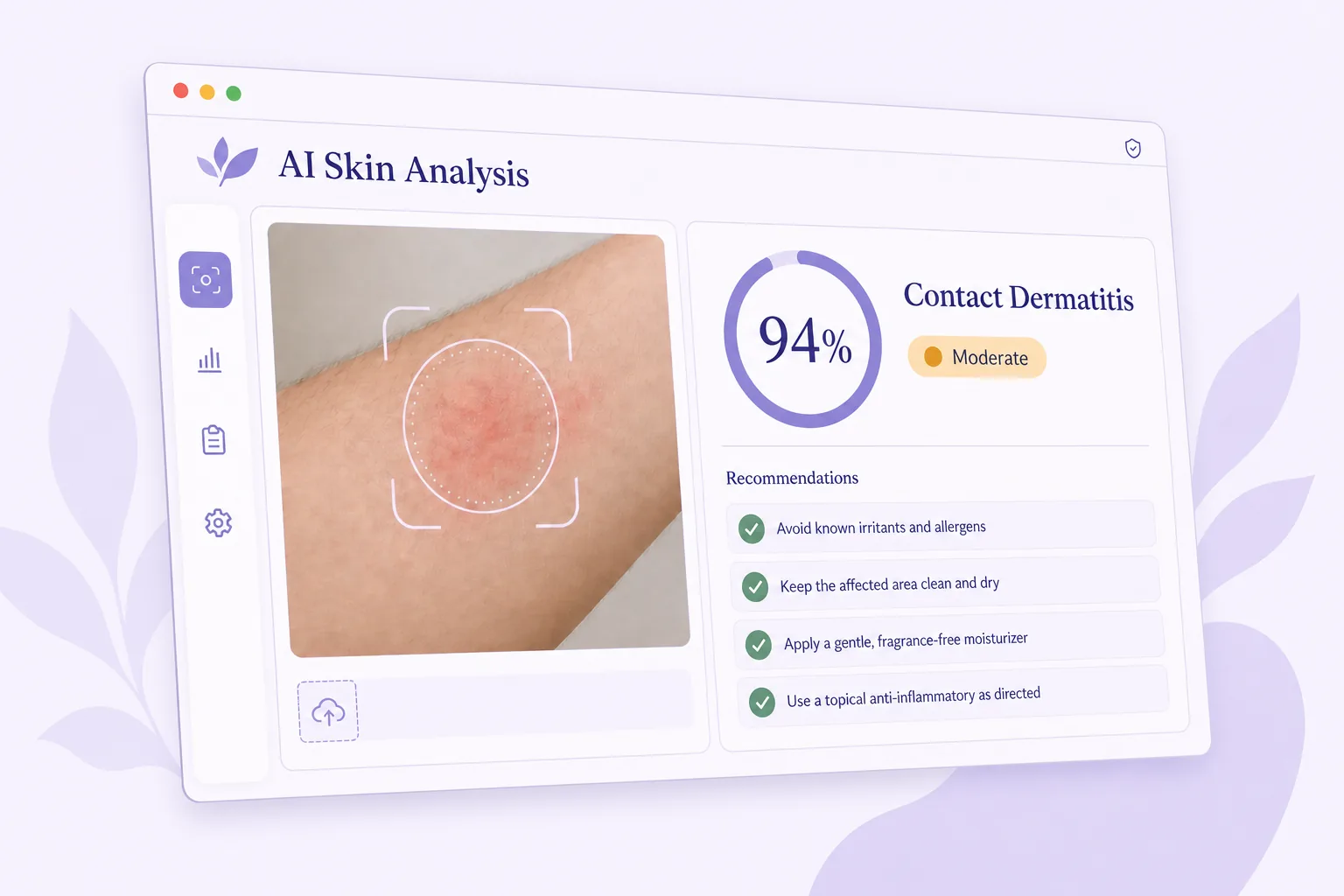
Not sure it's scalp psoriasis? Scan the rash — RashScan compares it against 50+ skin conditions in about a minute.
Scan your rash nowTriggers and flare management
- Stress — among the most reliably reported flare triggers.
- Infections, especially strep throat, which can trigger or worsen psoriasis.
- Cold, dry weather, which strips moisture from the scalp and thickens scale.
- Certain medications — lithium, some beta-blockers and antimalarials are known to aggravate psoriasis.
- Smoking and heavy alcohol use, both linked to more severe and harder-to-treat disease.
Keeping a brief log of when flares start often reveals a personal pattern worth avoiding. Managing stress, moisturizing the scalp during winter, and reviewing medications with a clinician can meaningfully reduce flare frequency.
When to see a healthcare professional
- Joint pain, stiffness or swelling — especially morning stiffness — which can signal psoriatic arthritis, a related condition that benefits from early treatment.
- Nail changes such as pitting, thickening or lifting, which often accompany more systemic psoriasis.
- No response to OTC shampoos after several weeks of correct use — prescription treatment is usually the next step.
- Widespread plaques beyond the scalp, or psoriasis severe enough to affect sleep, work or self-esteem — this may call for systemic or biologic therapy under a dermatologist.
Sources and further reading
We use established public-health and dermatology references and link them directly so you can verify the guidance and read further.
Related skin guides
More skin tools from RashScan