By: RashScan Editorial Team
Updated: July 26, 2026
Standard: Educational information, not a diagnosis
Quick answer
A poison ivy rash is an allergic contact dermatitis triggered by urushiol, the oil in poison ivy, poison oak and poison sumac. It appears 12–72 hours after exposure as streaky red patches and lines of itchy blisters exactly where the plant brushed the skin. It is not contagious — only urushiol oil spreads it — and most cases clear on their own in one to three weeks with cool compresses, calamine and antihistamines for comfort.
What causes a poison ivy rash
Poison ivy, poison oak and poison sumac all produce the same resin: urushiol, a sticky oil found in the leaves, stems and roots. In roughly 8 out of 10 people, skin contact with urushiol triggers an allergic reaction called allergic contact dermatitis. The rash doesn't appear immediately — the immune system typically takes 12 to 72 hours to respond, and a first-ever exposure can take up to two weeks to react. You can pick up the oil directly from the plant, or indirectly from gardening tools, clothing, firewood or a dog that ran through the undergrowth.
The classic identification warning is "leaves of three, let it be": poison ivy and poison oak grow as three leaflets per stem, as low vines, shrubs or climbing vines, and the leaves change color with the seasons. Poison sumac grows as a shrub or small tree with 7–13 smooth-edged leaflets, mostly in wet, swampy areas. Urushiol stays active on surfaces for months — even dead plants and dried vines can cause a reaction.
What does poison ivy look like?
- Streaky, linear red patches — lines and streaks that trace exactly where a leaf or branch dragged across the skin.
- Small bumps and fluid-filled blisters, often arranged in rows; blisters may weep clear fluid and then crust over.
- Intense itching, often the dominant symptom, sometimes with swelling in sensitive areas like the face or forearms.
- Delayed new patches over the first week — skin that absorbed less oil reacts more slowly, which looks like spreading but isn't.
A poison oak rash or poison sumac reaction looks essentially identical, because the trigger — urushiol — is the same. The pattern is the big clue: streaks and lines on exposed skin (forearms, lower legs, hands, face) in someone who was recently outdoors.
The big myth: is poison ivy contagious?
No — and this is the most persistent myth about this rash. The rash itself cannot be passed to another person, and blister fluid does not spread it: that fluid is your own serum, not plant oil. Scratching open blisters does not carry the rash to new body parts either.
What does spread the reaction is leftover urushiol. The oil can linger under fingernails, on clothing, shoelaces, gardening tools, sports gear and pet fur, and touching those items days later can start a brand-new reaction. After any suspected exposure, wash skin with soap and cool water, launder clothing, wipe down tools and give outdoor pets a bath.
Poison ivy treatment and self-care
Act fast after exposure. Wash the skin thoroughly with soap and cool water as soon as possible — within 10 to 30 minutes is best — and scrub gently under the fingernails. Rinsing with water alone helps if that's all you have. Wash clothes and clean anything else that may carry the oil.
Once the rash has appeared, treatment is about comfort while it runs its course:
- Cool compresses or short cool showers several times a day to calm itch and dry weeping blisters.
- Calamine lotion or colloidal oatmeal baths for soothing, itch-relieving coverage.
- Oral antihistamines (such as diphenhydramine at night) to take the edge off itch and help sleep.
- OTC 1% hydrocortisone cream for small, mild patches — not on the face or broken skin.
- Keep blisters intact where possible; don't scratch, and cover weeping areas loosely.
Severe, widespread or facial rashes often need a prescription oral corticosteroid. One caution: steroid courses that are too short (a common five-day pack) can let the inflammation rebound, so clinicians typically taper over two to three weeks for significant cases.
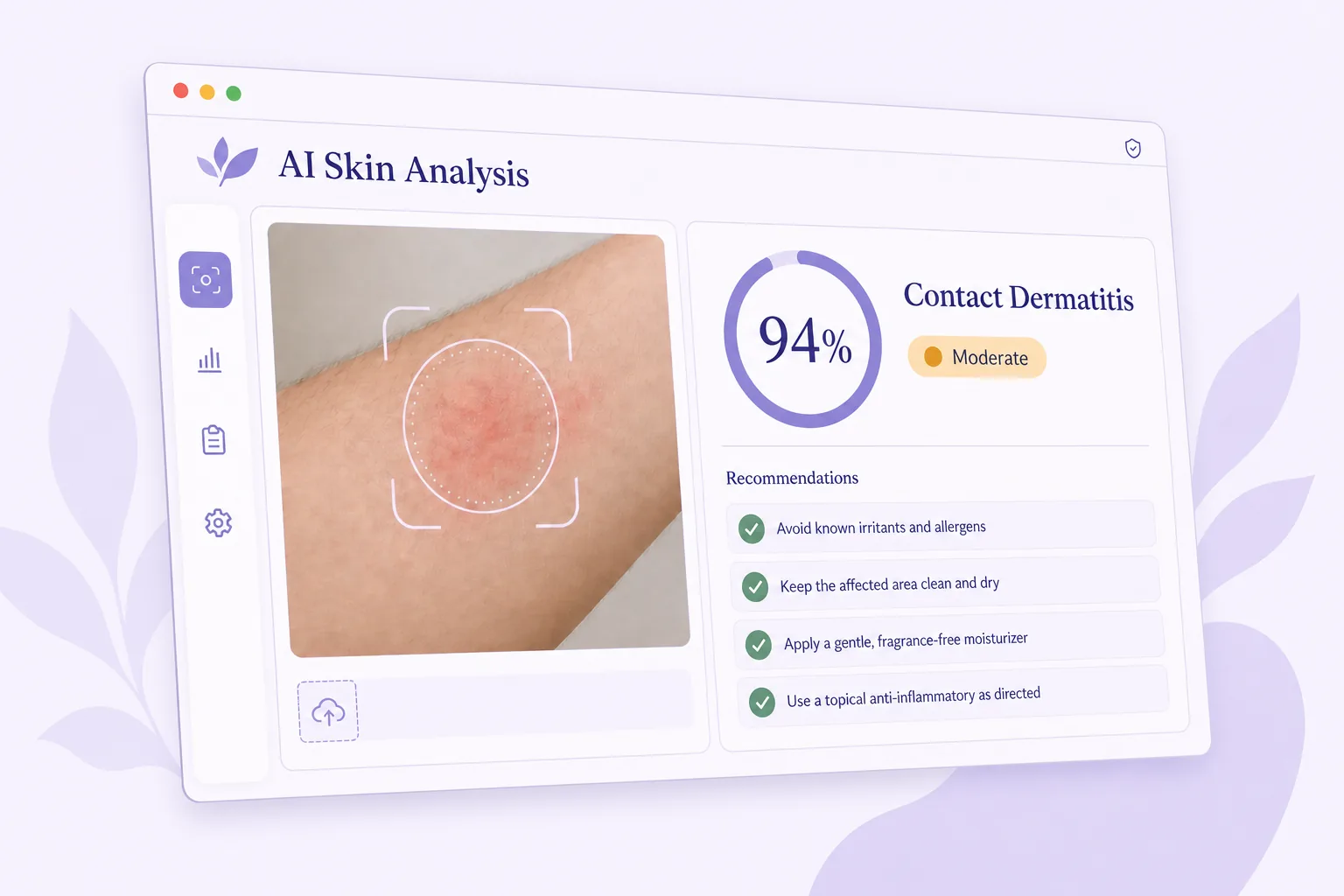
Not sure it's poison ivy? Scan the rash — RashScan compares it against 50+ skin conditions in about a minute.
Scan your rash nowHow long does poison ivy last?
Most poison ivy rashes last one to three weeks. Mild cases with small patches can settle in about a week; severe reactions, widespread rashes and first-time reactions tend to run the full three weeks or a little longer. New patches that appeared late usually heal last. Darker skin tones may be left with temporary dark or light marks (post-inflammatory pigmentation) that fade over weeks to months — that's normal healing, not scarring.
Conditions that can look similar
- Other contact dermatitis: reactions to nickel, fragrances, sunscreen or other plants can itch and blister, but usually lack the classic streaky, linear pattern.
- Shingles: grouped blisters too — but in a one-sided band with burning pain rather than itch, often with a day of tingling before the rash.
- Cellulitis: a bacterial skin infection causing spreading warmth, swelling and tenderness, sometimes with fever — needs prompt treatment.
- Swimmer's itch or insect bites: scattered itchy bumps rather than lines of blisters.
When to see a healthcare professional
- The rash involves the face, eyes or genitals, or the swelling is severe.
- It covers more than about 25% of your body, or the itch is unbearable despite self-care.
- You develop fever, pus, increasing tenderness or spreading redness — signs of infection.
- You have trouble breathing or throat tightness after inhaling smoke from burning plants — this is an emergency.
- The rash isn't improving after two to three weeks, or keeps coming back.
Sources and further reading
We use established public-health and dermatology references and link them directly so you can verify the guidance and read further.
Related skin guides
More skin tools from RashScan