By: RashScan Editorial Team
Updated: July 26, 2026
Standard: Educational information, not a diagnosis
Quick answer
Hives (urticaria) are raised, itchy welts caused by histamine release from mast cells in the skin. Each welt typically fades within 24 hours without a trace, even as new ones appear elsewhere. Most cases are triggered by a viral infection, food, medication or a physical stimulus such as pressure, cold or heat — and respond well to second-generation antihistamines like cetirizine or loratadine. Swelling of the lips, tongue or throat, or trouble breathing, is an emergency.
What hives are
Hives — the medical term is urticaria — happen when mast cells in the skin release histamine and other chemicals into the surrounding tissue. That makes tiny blood vessels leak fluid, and the fluid collects as a raised, swollen welt called a wheal. Because the reaction is so superficial, each individual wheal typically fades within 24 hours and leaves no mark, even while new welts keep popping up nearby. That wandering, here-today-gone-tomorrow quality is one of the clearest clues that a rash is hives.
Hives are remarkably common: roughly one in five people will have an episode at some point. They can appear at any age, in people with no allergies at all, and in many cases no single trigger is ever pinned down — which is frustrating but normal.
What they look and feel like
- Raised pink or red welts with paler, blanching centers — pressing one makes the middle turn white briefly.
- Intense itch, often the most distressing part; the skin may also tingle or burn.
- Welts of any size, from pinhead dots to patches several inches across, which can merge into large, map-like areas.
- They move around the body — a welt on your arm at breakfast can be gone by lunch and replaced by new ones on your back.
- On deeper skin tones the redness may be subtle, but the raised swelling and itch are the same.
Acute vs chronic hives
Doctors split hives into two buckets based on duration. Acute hives last less than six weeks and usually follow a recognizable trigger — a viral illness, a food such as nuts or shellfish, or a medication. Most acute episodes settle on their own within days to a couple of weeks.
Chronic hives persist or keep recurring beyond six weeks. Counterintuitively, chronic urticaria is usually not allergy-driven: in most adults it is spontaneous, with the immune system activating mast cells without an external allergen. A large subgroup has physical urticaria, where welts are provoked by pressure (tight waistbands, leaning on a surface), cold, heat, sweat, vibration — or simple stroking of the skin, called dermatographia. Stress doesn't cause chronic hives on its own, but it reliably amplifies flares.
What causes hives: common triggers
- Viral infections — the single most common cause, especially in children, where hives often appear during or just after a cold or stomach bug.
- Foods such as nuts, shellfish, eggs and milk — these usually cause hives within minutes to two hours of eating.
- Medications, especially NSAIDs like ibuprofen, antibiotics and occasionally blood-pressure drugs such as ACE inhibitors.
- Physical triggers: heat, cold, pressure, vibration, sunlight, water contact and exercise.
- Stress and illness as amplifiers — they lower the threshold at which mast cells fire, making flares bigger and more frequent.
Hives treatment and self-care
First-line hives treatment is a non-drowsy, second-generation antihistamine such as cetirizine or loratadine, taken daily until the episode clears — not just when the itch flares. These block histamine before it can raise new welts and are safe for extended use. Cool compresses or a cool (never hot) shower soothe the itch, and loose, soft clothing avoids the friction that can spark new wheals.
During an active flare, it's sensible to avoid NSAIDs and alcohol, both of which can worsen hives. If standard antihistamine doses don't control symptoms, doctors commonly increase the dose (up to fourfold under supervision) before adding other medicines. For chronic hives that still break through, the injectable biologic omalizumab is a well-established next step that targets the IgE pathway driving many cases. Short steroid courses are reserved for severe flares — they're not a long-term strategy.
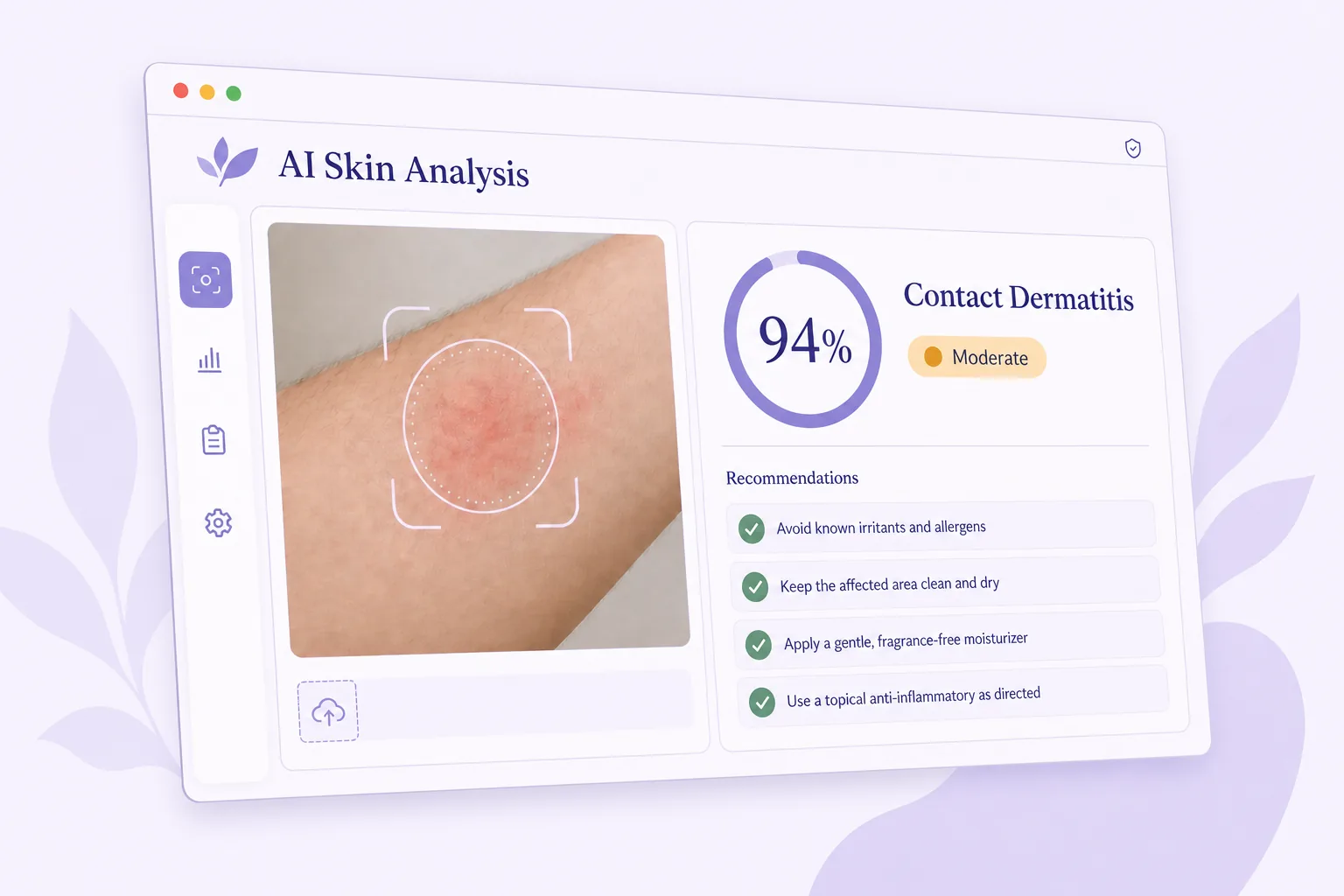
Not sure it's hives? Scan the rash — RashScan compares it against 50+ skin conditions in about a minute.
Scan your rash nowAngioedema and anaphylaxis: the emergency signs
About four in ten people with hives also get angioedema — deeper swelling of the lips, eyelids, hands or genitals that feels tight and puffy rather than itchy. Angioedema of the tongue or throat is dangerous. Call emergency services immediately, and use an epinephrine auto-injector if one is prescribed, if hives come with any of these:
- Swelling of the tongue, lips or throat, or a sensation that the throat is closing.
- Trouble breathing, wheezing or noisy breathing (stridor).
- Hoarse voice or difficulty swallowing.
- Dizziness, faintness, rapid pulse or a feeling of impending collapse.
- Widespread hives plus vomiting, cramps or diarrhea after a food or sting.
This combination is anaphylaxis — epinephrine is the treatment, and antihistamines are not a substitute for it.
Conditions that can look similar
- Eczema: dry, scaly, persistent patches that stay in one place for days or weeks — hives move and fade within 24 hours.
- Contact dermatitis: an itchy reaction fixed to where an irritant or allergen touched the skin.
- Insect bites: raised itchy bumps too, but each has a central punctum and lasts days, not hours.
- Urticarial vasculitis: welts that last longer than 24 hours, bruise, hurt more than itch, or leave marks — this needs medical review and sometimes a biopsy.
- Viral rashes (exanthems): flat or slightly raised redness that spreads symmetrically with fever and doesn't blanch-and-fade like wheals.
When to see a healthcare professional
- Hives keep recurring or persist beyond six weeks (chronic urticaria deserves proper management, not just coping).
- Over-the-counter antihistamines at standard doses don't control the itch.
- Welts last more than 24 hours in one spot, bruise, blister or leave dark marks behind.
- You get recurrent angioedema, especially with no visible hives — this can be a different condition needing specific tests.
- Hives follow a new medication or arrive with fever, joint pain or a general unwell feeling.
Sources and further reading
We use established public-health and dermatology references and link them directly so you can verify the guidance and read further.
Related skin guides
More skin tools from RashScan